
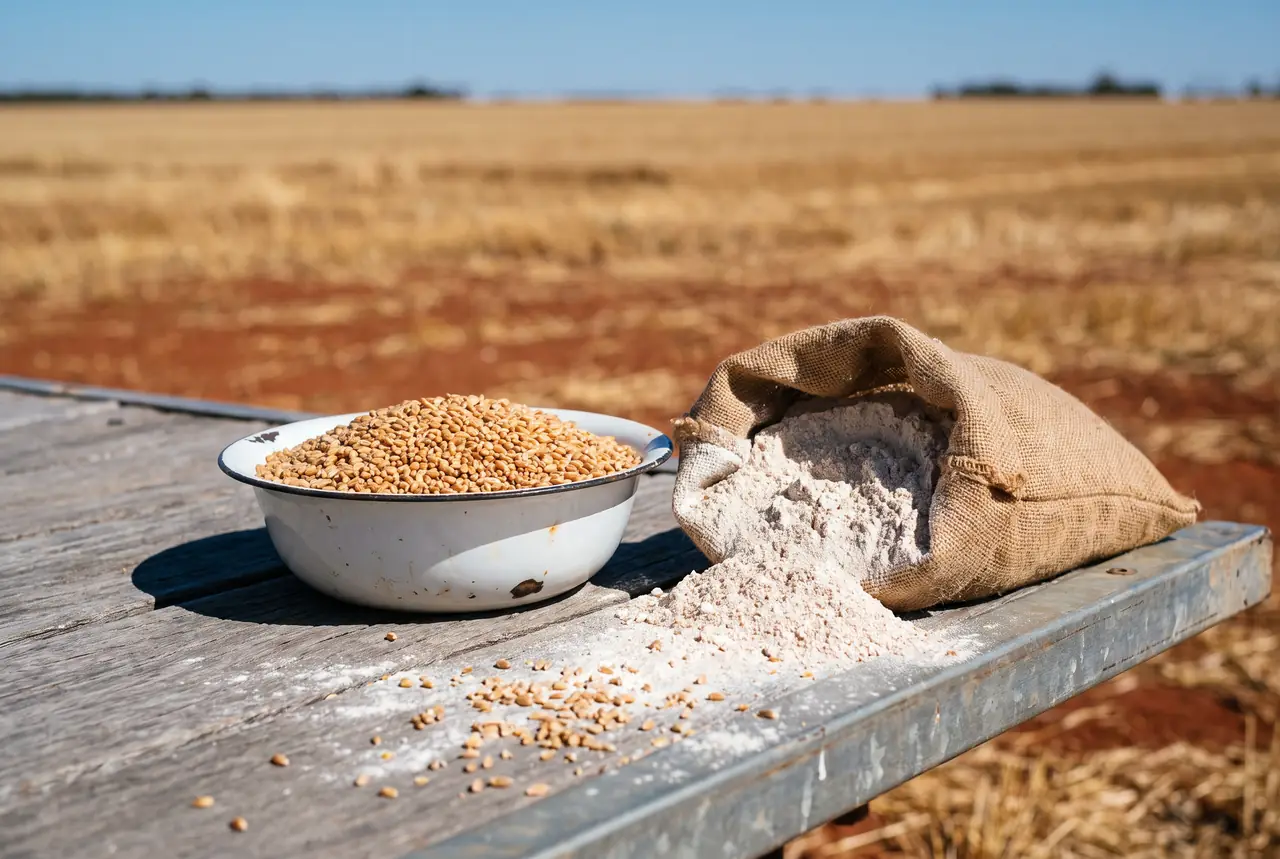
Australian grain
Australian wheat and barley, in containers and bags
Shiiv Imports sources Australian wheat and barley in containers and bags for flour millers, noodle makers, maltsters, bakeries and food manufacturers who need specific grades without buying a full vessel. We also source flour, noodles and baking mixes from Australian manufacturers, including private label. Each consignment carries the phytosanitary certificate and export permit it needs.
Wheat
Australian wheat is classified into standard grades, from prime hard and hard wheats for bread and noodles to premium white and standard white wheats for noodles, flatbreads and general baking, plus soft and durum wheats. Tell us the grade, protein and moisture limits, and the end use.
Barley
Malting barley for maltsters and brewers, and feed barley for feed mills, plus processed barley such as pearled and flaked for food manufacturers.
Containers and bags
We work in container lots and bagged supply, not bulk vessels. Bulk vessel cargoes are a different trade; if that is what you need, we will say so and point you in the right direction.
For bulk wheat, a new industry code under the Competition and Consumer Act 2010 replaced the Wheat Port Code on 1 October 2026. It requires port terminal operators and bulk wheat exporters to deal in good faith, and does not cover wheat shipped in bags or containers holding 50 t or less. Shiiv's container wheat falls outside it. ACCC: https://www.accc.gov.au/business/industry-codes/wheat-port-code-of-conduct DAFF: https://www.agriculture.gov.au/ag-farm-food/crops/wheat
Flour and grain-based products
Flour, noodles and baking mixes made by Australian manufacturers, including under your brand.
Season
Australian winter crops are harvested from about October to December, with new-crop wheat and barley shipping from late in the year into the new year.
Markets and protocols
Shiiv Imports already sources for international clients across Asia (China, Thailand, Vietnam and India), the Pacific (Fiji and Vanuatu), the Middle East (Dubai), the USA and Europe. We quote Australian grain to buyers in these markets and beyond. Grain markets set their own protocols and these change, so we check MICoR (https://micor.agriculture.gov.au) and confirm requirements in writing with your importer for every shipment. For Fiji, grocery, dairy and grain lead the brief.
Documents
Wheat and barley are prescribed grain. Each consignment is inspected by a DAFF-approved officer at a registered establishment and needs an Australian export permit, plus a phytosanitary certificate where your market requires one. The permit is requested through EXDOC. Plus invoice, packing list, certificate of origin and any analysis your buyer needs.
Send the brief
Send the grain brief
raj@shiv-impex.com · +61 413 939 862 · USA and Canada: Bhavin +1 630-336-7666
Sydney · Auckland · Singapore · Ahmedabad, India · Texas, USA
Questions importers ask
What is the difference between APW and ASW wheat?
Australian Premium White (APW) is a higher-protein white wheat widely used for noodles and breads. Australian Standard White (ASW) has lower protein and suits noodles, flatbreads and general baking. Grade specifications are set by the Australian industry each season.
Can I buy Australian wheat or barley in containers?
Yes. Container lots and bagged supply are our focus, for buyers who need a specific grade without a full vessel.
What documents come with Australian grain?
An Australian export permit for each consignment, a phytosanitary certificate where your market requires one, and commercial documents. Flour and other processed grain products are non-prescribed and only need what your market requires.
When is new-crop Australian wheat available?
Harvest runs from about October to December, so new-crop shipments start late in the year.
What is the difference between malting and feed barley?
Malting barley meets germination and protein limits for malting and brewing. Feed barley is graded for livestock feed on moisture, test weight and screenings.
Who is the exporter of record for grain?
It depends on the deal and is stated in the quote. Export permits and certificates are issued for each consignment in the exporter's name, while the registered establishment that inspects and loads the grain holds its own registration.